- Free Consultation: (631) 352-0050 Tap Here to Call Us










A Significant Victory for Gender-Discrimination Plaintiffs: Krause v. Kelahan


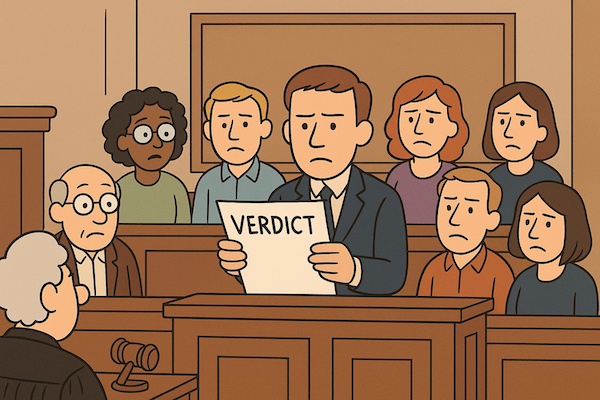
In a decision issued December 3, 2025, the Second Circuit Court of Appeals sitting in New York affirmed a substantial jury verdict in favor of a former high-school principal — one that underscores the continued vitality of gender-discrimination protections under Title VII of the Civil Rights Act of 1964 and the New York State Human Rights Law (NYSHRL).
What Happened — The Facts & Verdict
The plaintiff, Lisa Krause, served as principal of a junior-senior high school in the Oriskany Central School District beginning in December 2014. She testified that during her tenure, she was subjected to repeated discriminatory conduct by her supervisor, the superintendent — including repeated demeaning, harassing, and sexist remarks, unequal treatment of female staff, and threats regarding her employment.
According to the record, school-board members heard complaints about the superintendent’s behavior, but despite assurances, the conduct persisted — culminating in Krause’s placement on administrative leave in September 2016 and her termination the following month.
At trial, the jury found in Krause’s favor on her Title VII and NYSHRL claims — concluding that her gender was a motivating factor in the decision to terminate her, and that she suffered a hostile-work environment. The jury’s verdict awarded her $484,456 in damages, including lost income and emotional distress.
The defendants appealed — challenging (1) the sufficiency of the evidence supporting the verdict; (2) the award of lost-income damages; and (3) certain alleged trial errors, including an allegedly confusing instruction to the jury about New York’s student-accommodation laws.
Second Circuit Rejects All Grounds — Verdict Stands
On de novo review, which essentially means that the appellate court took a fresh look at the evidence, the Second Circuit held that the defendants had failed to carry their “heavy burden” to show that no reasonable jury could have found against them.
Notably, the Court reiterated the applicable standard: to overturn a jury verdict for insufficiency, the record would have to show a “complete absence of evidence” supporting the verdict or be so overwhelmingly favorable to defendants that “no fair-minded jury” could find otherwise.
Given the substantial record — including Krause’s own testimony and corroborating evidence from colleagues who witnessed or heard of the superintendent’s hostile behavior — the Court concluded the verdict was well supported.
Likewise, the award of lost-income damages stood. The Court found no abuse of discretion in the trial court’s decision to permit recovery — nor any compelling reason to order a new trial based on the challenged judicial comments.
Thus, the Second Circuit affirmed in full, leaving in place the jury’s verdict and the substantial damages award.
Why This Opinion Matters — Broader Implications
The Krause decision serves as a reminder that courts remain an essential avenue for vindicating workplace-discrimination claims. Even when defendants may emphasize performance or managerial discretion in their defense, juries may reliably find the plaintiff’s testimony of discriminatory treatment credible. The Second Circuit’s decision underscores several important points for employers and defendants — and for plaintiffs and their counsel — alike:
- Substantial-evidence standard remains rigorous but deferential. Appellate courts rarely overturn jury verdicts absent clear error — consistent with the principle that courts should not “weigh conflicting evidence” or second-guess credibility determinations.
- “Motivating factor” standard effective. Under Title VII, a plaintiff does not need to show that her protected characteristic was the sole cause of her termination. Here, evidence showed that gender was at least a motivating factor, sufficient to support liability.
- Lost-income damages remain available. The Court upheld a substantial award of back pay and related damages — signaling that courts will not lightly strip victim-plaintiffs of full compensation once liability is found.
- Hostile-work environment claims still viable. The conduct described at trial — repeated harassment, demeaning comments, differential treatment toward women — illustrates common forms of workplace discrimination, and the verdict confirms that such patterns remain actionable under Title VII and analogous state law.
For plaintiffs considering or pursuing employment-discrimination claims, Krause v. Kelahan demonstrates that a well-supported record — credible testimony, corroboration, patterns of conduct — can overcome formidable defenses even through trial and appellate review.
For employers, the decision is a cautionary tale: discriminatory conduct, even if informal or subtle (e.g., comments about clothing or parenting, unequal scrutiny, micro-management tied to gender stereotypes), can lead to significant liability. Structural safeguards — including robust human-resources practices, training, and enforcement of anti-discrimination policies — remain vital.
Conclusion
The Court’s affirmation of a nearly half-million-dollar verdict in favor of a female school principal is a strong signal that courts remain committed to enforcing workplace-discrimination laws. The decision in Krause v. Kelahan reflects the enduring principle that employment decisions cannot be tainted by gender bias — even when wrapped in claims of managerial discretion or performance concerns.
If your organization needs guidance evaluating or updating your discrimination policies, or if you believe you may have grounds for a Title VII (or state-law) claim, our firm stands ready to assist. Our employment lawyers are available at (631) 352-0050 or we can be reached via our website at http://linycemploymentlaw.com.
The full version of the Krause decision is available via the Second Circuit’s website.